top of page


Blog


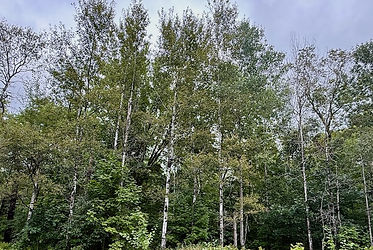
Quaking & Bigtooth Aspen
Quaking and bigtooth aspen are familiar trees of the Mahoosuc region, but their similarities can make them difficult to tell apart. Larry Ely explores how to distinguish the two species, explains their remarkable ability to form long-lived clonal colonies, and examines their importance to wildlife and forest management.

Two-spotted Bumblebee: A Survivor!
A familiar spring visitor seemed lost to a season of cold and wind—until, at last, the resilient two-spotted bumblebee returned. In this personal reflection, Sara Wright traces the shifting rhythms of pollinators and finds hope in nature’s remarkable ability to adapt.


Northern White Cedar
Northern white cedar, or arborvitae, is a quiet but essential tree of our region’s wetlands and seepage forests. Known as the “Tree of Life,” it has a long history of medicinal use, remarkable longevity, and ecological importance. Though often overlooked, this resilient conifer thrives where others cannot, shaping both habitat and landscape across northern New England.


Lessons from the Garden
Barbara Murphy’s journey from a suburban upbringing to a life rooted in gardening reveals how small, everyday interactions with the natural world can foster deep connection and lasting conservation values. At Valentine Farm’s Habitat For All Garden, she has helped create a welcoming space where anyone can experience nature up close—and discover that meaningful connection begins right at home.


Story Time at Valentine Farm
Each Saturday afternoon, families gather at the Habitat For All Garden at Valentine Farm for Story Time—where nature stories spark curiosity and hands-on activities bring the outdoors to life. Designed for young children and their caregivers, this weekly program invites exploration, creativity, and shared discovery in a welcoming garden setting.

Across 2,000 Miles: How One Songbird Connects Conservation & Community
From the windswept summit of Old Spec Mountain to the shaded cacao farms of the Dominican Republic, the Bicknell’s Thrush connects people, places, and purpose. This rare migratory bird reveals how conservation depends not only on science, but on partnerships that support both ecosystems and the communities who depend on them.


Paper Birch: Seeing the Forest Through its Trees, Part XI
Paper birch—New England’s iconic “white birch”—brings light and motion to the forest with its gleaming bark and graceful form. A fast-growing pioneer, it thrives in disturbed landscapes before yielding to longer-lived species, leaving behind quiet “birch graveyards” that tell the story of forest renewal.


A Local Couple’s Love For Land Leads to Easement Donation
Bob O’Brien and Michaela Casey help to expand Albany Township’s conservation footprint Bob O'Brien, Michaela Casey, Kirk Siegel, and Ruthie Clements (Sebago Clean Waters) at the closing of the Flint Farm Addition, June 2026. Bob O’Brien and Michaela Casey have loved Albany Township’s rugged forest landscape since they first visited Picnic Hill Road in 1987. Across the years, they have made the land their home – maintaining an expansive garden, tapping trees for maple syrup, and caring for a...

A Carpet of Wild Violets
From deep purple to pale yellow, wild violets create a living tapestry across fields and forests each spring. Hardy, adaptable, and beloved by pollinators, these humble wildflowers offer both beauty and ecological richness—thriving quietly beneath our feet while supporting a vibrant web of life.
bottom of page