
Where the Fireflies Still Glow
By Sara Wright
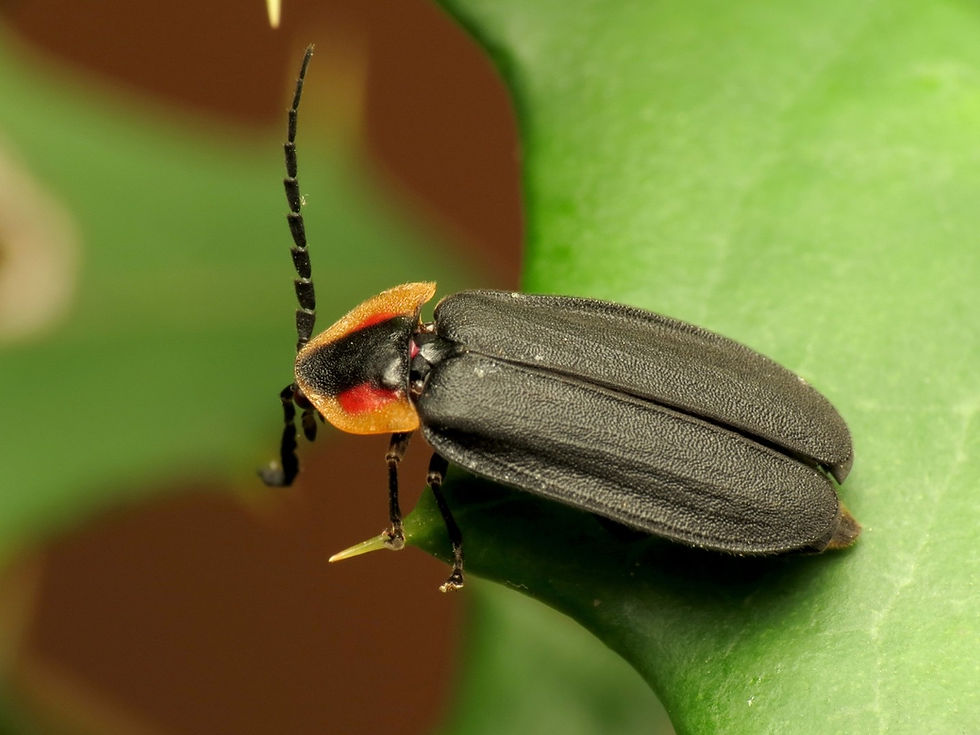
One emerald jewel blinks at my open window. They’re here! I’m out of bed in a flash, on my knees peering beyond the screen. Are there more climbing the hill from the mixed forested brook? It takes a few seconds for my eyes to adjust. One flightless glowworm is twinkling in the grass as others appear like vagrant stars – waxing gold and green winking, signaling to one another. As far as I can tell, the two most common species are deep in conversation.
Memories of a sea of fireflies flood my senses. I have loved these ‘lightning bugs’ since I was a child. When I first moved here, I camped next to the brook and couldn’t fall asleep at night because it seemed as if the field itself was on fire with thousands of mystical lights that blinked and flickered as they skimmed tall grasses.
“I don’t want to imagine a world without fireflies—they offer us the gift of wonder.”
Of course, most of us know that fireflies are in steep decline, and this has also been the case here, so I have taken steps to create a home for these beloved insects. I live in a protected hollow with a stream on three sides. Wild grasses and hay ferns line the hill that is never cut. I deliberately leave all ferns and one side of my cabin buried in leaves all year long to support the fireflies who spend so much of their lives in and on the ground.
As a few perched on the screen, they literally brought in the light while gray tree frog trills permeated fragrant woodland air. The thick moist air of July continues to seduce me as I meander out the door to be near those lights, imagining that these insects might feel as pleased in their own way to be around me as I do amongst their kind.
Fireflies are winged beetles. The term ‘glowworm’ can refer to firefly larvae or wingless adult female fireflies. Glowworms, like flashing fireflies, are active during dusk or nighttime and use bioluminescence to communicate. While males look like typical fireflies, glowworm females resemble larvae; they cannot fly because their wings are short or absent. Both glowworms and fireflies are bioluminescent.

When a chemical called luciferin inside their abdomen/tail combines with oxygen, calcium and adenosine triphosphate, a chemical reaction occurs that results in bioluminescence. This ‘cool’ light is the most efficient in the world because almost 100 percent of the energy used is emitted as light and not heat.
Each species has a unique pattern of flashes that they use to attract mates. Most fascinating is that some fireflies synchronize their yellow, pale red, green, or orange lights. Several studies have shown that female fireflies choose mates depending upon flash pattern characteristics. Higher male flash rates, as well as increased flash intensity, have been shown to be more attractive to females in two different firefly species.
Fireflies face numerous challenges, including increasing light pollution, pesticide use, logging, mowing, and habitat loss. If you want to help, please turn off outside lights unless they are being used. Mow lawns less frequently or, better yet, shrink or replace some of those lawns with ground covers, native flowers, grasses, plants, trees and mosses. Leave piles of leaf litter around the edges of open land as I do here. Reducing the amount of ground disturbance by allowing wild plants to grow naturally around forest edges and leaving decaying or dead wood also offers refuge for these insects
I don’t know about you, but I don’t want to think about a world without fireflies, for they offer us the gift of wonder while creating a place in our hearts to fall in love with nature all over again every early summer night.


Comments