
Paper Birch: Seeing the Forest Through its Trees, Part XI

By Larry Ely
Paper birch, often called white birch, is known for its beauty in our New England woods and historically was left uncut around homes and roadways. Donald Culross Peattie in “Natural History of Trees” wrote, “As a result it is now one of the best-loved trees of the New England landscape, and when we remember a scene there, we see birches in it - gleaming white trunks, houses, and churches painted a cold, clean white, and pure country snow stretching over dale and hill.”
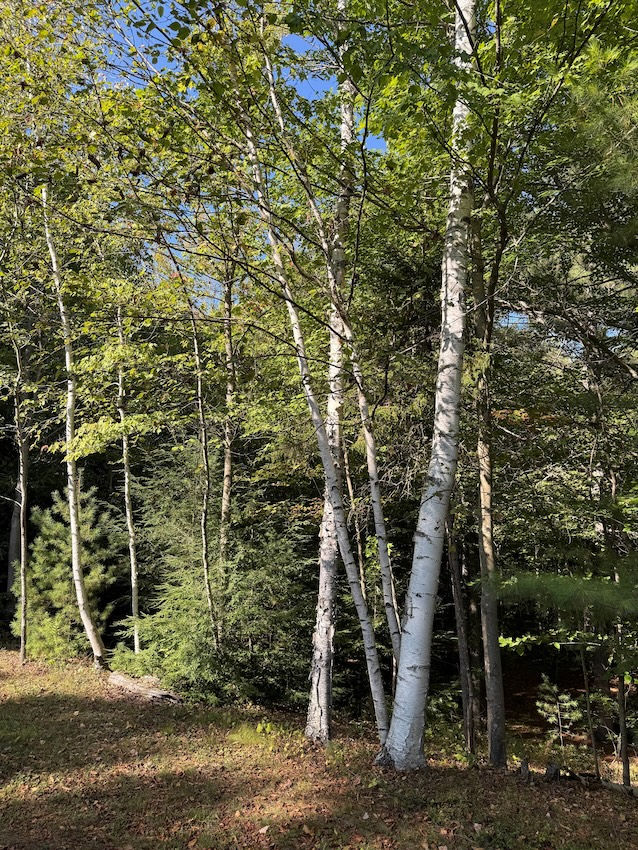
Standing out among a forest of green softwoods and gray hardwood trunks, the white birch has been described as a tree of incomparable grace with its tall, slender branchless trunk topped by a round head with drooping branches. The tree bends and sways with the wind and is often seen with its crown bent over when ice covered, sometimes to snap back upright and sometimes not. It is not unusual to find the odd paper birch permanently leaning in an arc towards the ground, still clinging to life.
Paper birch (Betula papyrifera) is common across most of Maine and New Hampshire and extends into higher elevations where it mixes with the spruce-fir habitat as it can withstand temperatures as low as -40F. While it prefers rich moist soils and is often found along streams or lakeshores, it is a pioneer species that can occupy drier disturbed sites that have abundant sunlight. Pure stands often result when seedlings emerge in disturbed sites, though the tree is also often found singly or in small groups as the light winged seeds are widely spread across the forest by wind.

Like most pioneer species, paper birch grows rapidly, up to 2 to 3 feet annually, and is shade intolerant and not long lived and is eventually overtopped by shade tolerant species. It might grow to 60 or 70 feet in height with a possible 2-foot diameter, though rarely seen at those sizes now. Death usually comes within 50 to 80 years, and a dead tree might stand for a lengthy time before wind or rot brings it down, after which it decays quickly. I think of those dying out stands as birch graveyards.
Paper birch is easily identified by its chalky, white bark that peels off in thin papery strips. The natural process of peeling bark makes room for new growth and helps remove moss and lichens. The white bark also reflects sunlight, helping the tree to survive extreme cold temperatures of winter. The young saplings of 3 to 10 years have reddish-brown bark until the trunk reaches 1- to 2-inch diameter and the white bark develops.
“As we remember a New England scene, we see birches in it—gleaming white trunks standing bright against forest, field, and snow.”
Paper birch was extremely valuable to Native Americans of the region and was used for canoes, roofing material, containers and medicinal purposes. At one time, it was thought to be the most valuable tree in Maine with wood turned into numerous products such as toys, dowels, clothespins, and even golf tees. Those products are now made overseas, and birch is now mostly used for pulp and firewood. Birch becomes “punky” if left too long to the elements, but it burns quickly with excellent heat and little smoke when split and stacked while green. The bark also makes for a great fire starter as any local boy scout could tell you.
This is part of a continuing series looking at the life of the common trees in our Mahoosuc Mountain Region. “Small Things” contributor Sara Wright posted a January, 2024, column titled Birches – A Gift to the Forest with more information about both white and gray birch and their high value to wildlife.


Comments